
The basic rule
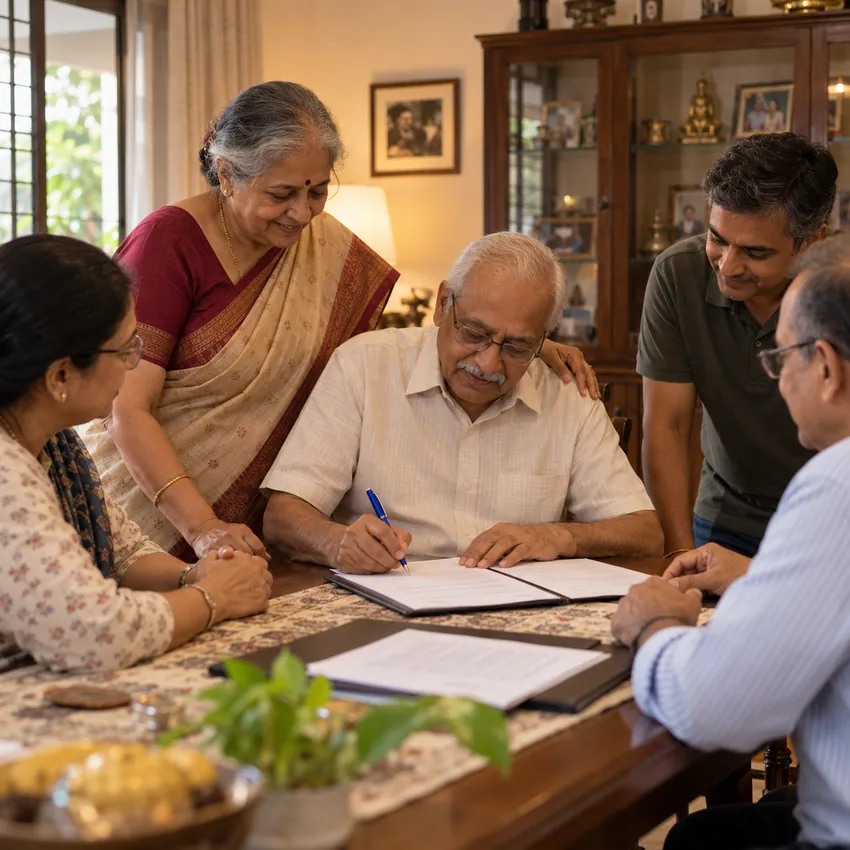
Under Section 63 of the Indian Succession Act, a Will must be attested by at least two witnesses. Each must either see you sign, or hear you acknowledge your signature, and each must sign the Will in your presence. The two witnesses do not have to be present at the same time, though it is simpler if they are.
Who makes a good witness
- An adult of sound mind who understands what they are signing.
- Someone who inherits nothing under the Will, and whose husband or wife inherits nothing either.
- Someone likely to be around and traceable for years: a neighbour, a colleague, your family doctor.
The trap that cancels gifts
Under Section 67, a gift in the Will to a witness, or to a witness's husband or wife, is void. The Will itself survives, but that gift fails. People often ask a son or daughter-in-law to witness, and unknowingly cancel the very gift they meant to make.
Witnesses prove the Will later
If the Will is ever disputed, at least one attesting witness who is alive must be called to prove it, a rule from Section 68 of the old Evidence Act that continues under the Bharatiya Sakshya Adhiniyam, 2023. Choose witnesses who can be found and who will remember the day.
Witnesses at registration
If you register the Will, the Sub-Registrar also needs witnesses to identify you. The same two people can usually do both, which is why we ask you to bring them on the day.
Frequently asked questions
How many witnesses does a Will need in India?
At least two, each of whom saw you sign or heard you acknowledge your signature, and signed in your presence.
Can a beneficiary witness a Will?
They can sign, but under Section 67 any gift to them, or to their husband or wife, becomes void.
Do both witnesses have to be there at the same time?
No, but each must sign in your presence. Having both present together is simpler.
General information, not legal advice.
Make your Will
Speak to our team for free. We tell you which package suits your family, what it costs and how long it takes, before you commit to anything.